What Is Collagen and Why Is It Important for Your Body?
When people hear the word collagen, they usually think about skin and ageing.
However, the role of collagen in the body goes far beyond appearance.
Collagen is found in the skin, bones, tendons, ligaments, blood vessels, and many other tissues. It helps them maintain strength, flexibility, and the ability to withstand everyday stress.
In fact, collagen is one of the body’s most important structural proteins.
It is the most abundant protein in the human body, accounting for approximately 30% of all proteins.
What makes collagen even more fascinating is that it is not a single protein. Scientists have identified 28 different types of collagen, which together form a complex support network throughout the body.
The Collagen Framework of the Body
Most of the time, we are completely unaware of collagen doing its job.
We look in the mirror, move around, exercise, walk, and climb stairs.
Behind all of these actions is a collagen network that helps tissues maintain their structure and withstand mechanical stress.
Collagen is present in nearly every connective tissue in the body.
It helps form the skin.
It is a key component of tendons and ligaments.
It supports the structure of bones and blood vessels.
It is found in many internal organs.
This is why the condition of collagen affects not just one tissue, but the body as a whole.
How the Body Produces Collagen
Collagen synthesis is a complex, multi-step process.
The body does not produce mature collagen instantly.
First, specialised connective tissue cells produce procollagen, the precursor of collagen.
This process requires amino acids, vitamin C, iron, copper, and several enzymes.
Once produced, procollagen is released outside the cell, where it undergoes a series of transformations.
Individual molecules gradually assemble into strong collagen fibres, which become part of the skin, tendons, ligaments, and other tissues.
This process takes time.
The first stages of new collagen formation may begin within days.
However, the development of fully formed collagen fibres takes weeks, while tissue remodelling and renewal continue for months.
This is one reason why studies on collagen peptides typically last at least 8–12 weeks.
The body needs time not only to synthesise collagen molecules but also to integrate them into connective tissues.
What Happens When Collagen Structure Is Disrupted?
The importance of collagen becomes especially clear when its structure is impaired.
Certain inherited disorders are directly linked to collagen defects.
One example is osteogenesis imperfecta, a condition associated with increased bone fragility.
Another is Ehlers-Danlos syndrome, a group of disorders affecting connective tissue that can impact the skin, ligaments, and joints.
There are also diseases linked to specific collagen types that may affect muscle function and connective tissue health.
These conditions highlight how fundamental collagen is to the normal functioning of the human body.
Why Collagen Changes With Age
The collagen network is constantly being renewed.
Throughout life, old collagen fibres are broken down while new ones are produced.
During youth, these processes are generally balanced.
However, after the age of 25–30, the body gradually becomes less efficient at replacing collagen.
After menopause, age-related changes may accelerate further due to the natural decline in oestrogen levels.
Several lifestyle and environmental factors can also affect collagen:
- Smoking
- Excessive exposure to ultraviolet (UV) radiation
- Chronic stress
- High sugar intake
- Long-term inflammatory processes
These factors may contribute to the breakdown of collagen fibres and affect the quality of connective tissue.
Fortunately, some of these factors can be influenced.
Adequate protein intake, sufficient vitamin C and other essential nutrients, regular physical activity, sun protection, avoiding smoking, and a healthy lifestyle can all help support normal collagen production.
In recent years, researchers have also devoted increasing attention to collagen peptides. Scientists continue to investigate their role in supporting the skin, joints, bones, and other connective tissues, particularly during periods when the body’s natural collagen production begins to decline with age.
For this reason, many people choose to include collagen peptides in their daily routine as part of a broader approach to supporting connective tissue health.
Why We Pay So Much Attention to Collagen
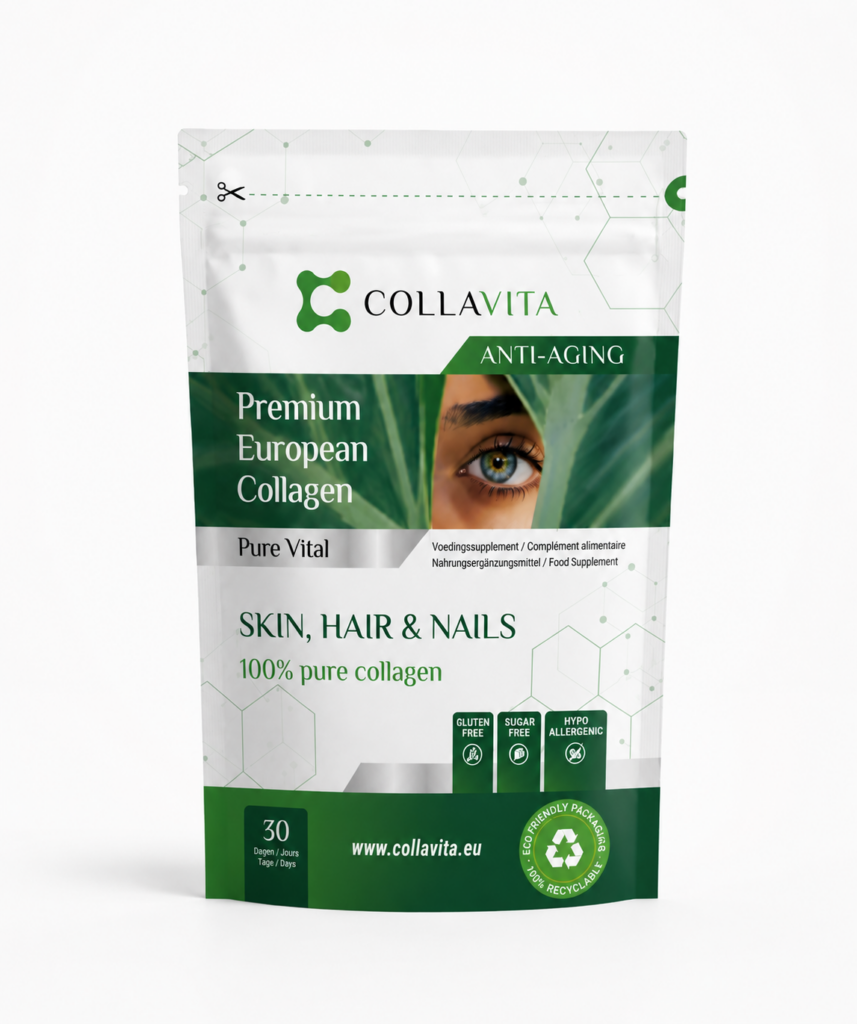
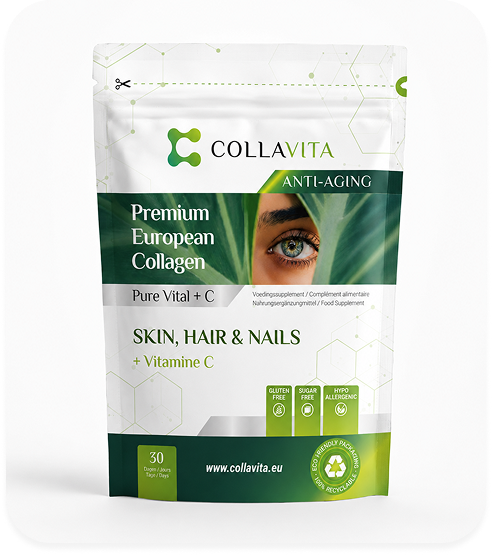
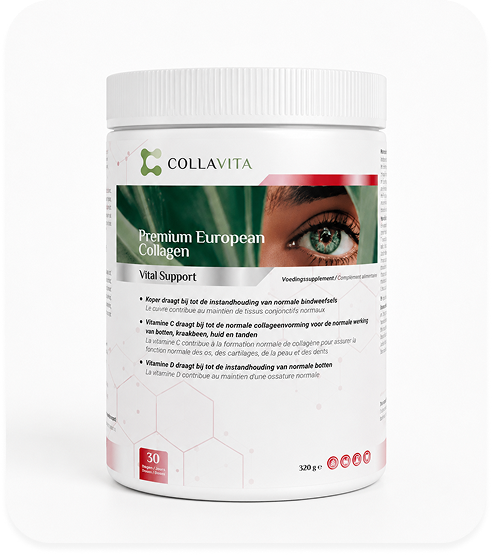
At Collavita, collagen is our sole focus.
That is why we place great importance on scientific research, ingredient quality, and the latest knowledge about the role of collagen in the body when developing our products.
The more you learn about collagen, the more you realise how remarkable and complex this system truly is.
We believe that a quality product begins with a deep understanding of the science behind it.